How to Use ChatGPT for SEO Optimization: Your 2025 Playbook
Updated January 15, 2026

Using ChatGPT for SEO optimization means leveraging artificial intelligence to streamline and enhance your search visibility strategy. By 2025, this is no longer a novelty; it's a core competency. Think of it less as an automated writer and more as a strategic partner that can handle tedious tasks like keyword research, content outlining, and technical code generation, freeing you up to focus on high level strategy. This shift toward AI integration, often called generative SEO, is essential for staying competitive as search engines evolve into answer engines.
This guide will show you exactly how to apply ChatGPT to practical SEO workflows, moving beyond theory to achieve measurable results. Understanding how to create authoritative content for both traditional search and AI answers is the key to thriving in this new landscape. Mastering the principles behind SEO for Generative AI Search is non negotiable for maintaining visibility in this evolving digital world.
How ChatGPT for SEO Changes Workflows
The most significant change in using ChatGPT for SEO is the shift from manual execution to strategic oversight. Instead of spending hours compiling keyword lists or structuring article outlines, SEO professionals can now prompt an AI to perform these tasks in minutes. This allows you to reallocate your time toward what truly requires human intellect: competitive analysis, strategic planning, and performance measurement. The efficiency gains are substantial and transform daily operations.
Using AI to Elevate Your SEO Strategy
AI integration makes scaling your efforts achievable. For instance, generating hundreds of long tail keywords and semantic clusters can be done in minutes, not hours. Creating detailed, data driven content briefs becomes an automated process, ensuring high quality and consistency across all content. For technical SEO, generating Schema markup or writing robots.txt rules is now as simple as a conversational prompt. The role of an SEO is evolving from a task doer to a strategy driver. Success in 2025 and beyond hinges on your ability to ask the right questions and effectively guide your AI tools.
Unlocking Keyword Research using ChatGPT for SEO
Drowning in endless keyword spreadsheets? You’re not alone. Traditional keyword research often feels like searching for a needle in a digital haystack. This is where ChatGPT completely changes the game for SEO in 2025, turning a tedious chore into a strategic advantage. It allows you to move far beyond basic lists by unearthing long tail keywords, grouping terms into semantic clusters, and analyzing user intent with remarkable accuracy.
The goal here isn't just to find keywords; it's to build a content strategy that targets high value queries and boosts your AI search visibility.
How to Use ChatGPT for Deeper Keyword Analysis
The real magic of using ChatGPT for keyword analysis lies in its ability to understand context and nuance. Instead of just spitting out keywords, you can instruct it to think like your target audience. For example, prompting it to generate detailed user personas for a niche market helps you understand the genuine motivations behind their searches. This process reveals not just what people are searching for, but why, leading to a more effective content strategy.
A simple prompt like, "Act as a marketing manager for a B2B SaaS company. What are your biggest pain points when monitoring brand mentions online?" can reveal a goldmine of problem aware keywords that traditional tools might miss. According to a 2024 HubSpot survey, 64% of marketers reported that AI tools helped them create higher quality content and SEO strategies. This shows that strategies prioritizing user intent deliver tangible results.
Generating Semantic Keyword Clusters with an AI SEO Co-pilot
One of the most powerful ways to use ChatGPT for SEO is by creating semantic keyword clusters. These are groups of related keywords that cover a single topic from multiple angles, helping you build topical authority and signaling to search engines that your website is an expert resource. For instance, instead of only targeting a head term like "brand monitoring," ask ChatGPT to construct a complete topical map covering the entire subject.
This structured approach ensures your content strategy is comprehensive, leaving no gaps for competitors to exploit. Building out these clusters also helps you determine how many keywords per page for SEO is appropriate for building authority without keyword stuffing.
Comparing Traditional vs. AI-Assisted Keyword Workflows
The difference in both efficiency and depth between traditional and AI-assisted workflows is massive. An AI assisted process not only saves significant time but also produces a more robust and strategically sound plan.
| Feature | Traditional Keyword Research | AI-Assisted with ChatGPT |
|---|---|---|
| Speed | Hours or days | Minutes |
| Scope | Limited by tool databases | Expands to intent, personas, and content gaps |
| Output | Flat keyword lists | Structured topical maps and semantic clusters |
| Focus | Primarily on search volume | Blends volume with user intent and context |
This table clearly illustrates how ChatGPT transforms keyword research from a simple data gathering exercise into a genuinely creative and strategic one. This shift is crucial for developing a modern SEO plan.
Using ChatGPT for Long-Tail Keyword Opportunities
Long tail keywords are essential for capturing high intent traffic. ChatGPT excels at generating these because it can simulate real user questions and conversational queries. A great prompt would be: "Generate 50 long tail keywords for 'AI visibility monitoring tools' targeting B2B SaaS teams." The AI can deliver clusters of high volume, low competition terms that a traditional tool might overlook. This is fundamental to effective generative SEO, as these specific queries are exactly what users type into AI chatbots.
Optimizing On-Page and Technical SEO with ChatGPT
Let's move from high level strategy to practical implementation. This is where ChatGPT truly excels as an assistant for the detailed work of on page and technical SEO. Think of it as your toolkit for achieving quick, tangible wins. We’re talking about optimizing your pages to be more compelling for users and perfectly clear for search engine crawlers.
This type of practical, AI assisted work directly improves your site's health, not just for Google but for the new wave of AI answer engines as well. Small, smart tweaks in this area can lead to surprisingly large gains in visibility and click through rates.
How to Use ChatGPT for Better SEO Meta Tags
Your meta title and description serve as your digital storefront window on the SERP. When done right, they can dramatically boost your click through rate. However, writing unique, engaging tags for hundreds of pages is a daunting task. This is an ideal job for ChatGPT, which can generate multiple creative options in seconds. The key is to provide it with the right context rather than a generic prompt.
This approach saves hours of brainstorming and ensures every page has a unique, optimized snippet ready to capture a searcher's attention.
Generating Powerful SEO Headings and FAQs with AI
Good structure is crucial. It makes content easier for people to read and helps search engines understand the page's topic. Strong H1 and H2 headings act as signposts. You can use ChatGPT to brainstorm headings that are both keyword focused and genuinely interesting. FAQ sections are also a goldmine for capturing long tail search traffic, as the questions often perfectly match what people are typing into Google. These simple prompts can turn a blank page into a well structured, user friendly outline in minutes.
Using ChatGPT for Technical SEO Optimization Audits
Beyond content, ChatGPT can assist with the more technical aspects of SEO. For instance, generating structured data like Schema markup, which helps search engines understand the context of your content, is straightforward. A prompt to create FAQ or Article schema takes only a few moments. It can also help diagnose issues. You could ask it to review your robots.txt file and explain the rules in plain English, ensuring you aren't accidentally blocking important crawlers.
Despite talk of AI disruption, a recent analysis showed that SEO traffic declines averaged just 10% to 20% for well optimized sites, mainly because AI overviews often cited those brands. Agencies working with clients like Riff Analytics can use ChatGPT for technical audits, with prompts like, "Audit my site for AI crawlability and suggest Core Web Vitals fixes," leading to faster load times and better rankings. You can explore the full analysis on GrowAndConvert.com to see how resilient SEO strategies are thriving.
Mastering Answer Engine Optimization with Generative SEO
The game has fundamentally changed. For years, we focused on Search Engine Optimization (SEO), arranging content to please Google’s crawlers and climb a list of blue links. But heading into 2025 and 2026, the playbook has been rewritten. The new game is Answer Engine Optimization (AEO), a direct result of generative AI’s rise. This is not a minor tweak; it's a seismic shift. We're no longer optimizing for a position on a page but for a citation inside an AI generated answer.
Earning AI Citations: How to Adapt Your SEO Strategy
To get your content cited by an LLM, you must start thinking like one. Large language models favor content that is clear, authoritative, and factually dense. Their purpose is to find the most direct, verifiable answer and present it conversationally. This means structuring your content with concise, declarative statements. Don't bury the lede. Pull key information out of long paragraphs and state it plainly. This structural discipline is the core of what we now call generative SEO. It’s about making your content the most logical and trustworthy source for an AI to quote.
The Rise of LLM Tracking and AI Search Visibility
You can't optimize what you can't measure. In traditional SEO, we lived by rankings, traffic, and conversions. In the AEO world, the metric that matters is "answer share"—the percentage of relevant AI generated responses that cite your brand. Monitoring this requires a new class of tools focused on LLM tracking. This is where a platform like Riff Analytics becomes essential. It gives you visibility into where your brand is mentioned in AI responses, allowing you to benchmark performance and pinpoint the sources LLMs are using.
According to digital marketing analyst Aleyda Solis, "The goal is no longer just to rank, but to be the source of the answer. This requires a fundamental shift in how we create and measure content, moving from keyword density to informational density." That insight perfectly captures the new reality. Success now depends on becoming the go to authority an AI trusts enough to cite by name.
Comparing Traditional SEO vs. Generative SEO Workflows
The daily focus for SEO teams is evolving. Foundational practices remain important, but the emphasis is now on creating citable, authoritative content and tracking its performance in a new ecosystem.
| Workflow Component | Traditional SEO (for Search Engines) | Generative SEO (for Answer Engines) |
|---|---|---|
| Primary Goal | Rank on a SERP for target keywords. | Get cited as a source in an AI response. |
| Content Focus | Long-form, comprehensive content with keywords. | Concise, factual, and highly structured statements. |
| Key Metric | Keyword rankings and organic traffic. | Answer share and citation frequency. |
| Measurement Tool | Rank trackers (e.g., Semrush, Ahrefs). | LLM tracking platforms (e.g., Riff Analytics). |
Understanding these differences is the first step to adapting your strategy. You can learn more about Answer Engine Optimization and how to build a winning AEO strategy in our detailed guide. ChatGPT's growth to 800 million weekly users has made it a dominant search ecosystem, capturing 23% of the market share for informational queries. This massive shift forces marketers to treat it as a core channel. The proof is in the data. You can discover more insights about ChatGPT's search performance to see its full impact.
Maintaining Quality in an AI SEO Workflow
While ChatGPT is an incredibly powerful assistant, it is not a silver bullet for SEO. Using it effectively means treating it as a starting point, never the final product. The real risk heading into 2025 and 2026 isn't using AI; it's using it without critical, expert human oversight. This is where your expertise becomes non negotiable. An AI assisted workflow is only as good as its quality checks. Without them, you risk churning out generic, factually incorrect content that hurts your credibility.
Your Essential AI Content Review Checklist
To maintain high standards, every piece of AI assisted content must pass through a rigorous human review. This is about validating information, infusing personality, and layering in genuine experience. Every claim, statistic, and statement the AI produces needs to be verified against trusted sources. This human layer is what separates high value, authoritative content from the sea of generic AI output. For a deeper look at this process, our guide on how to integrate AI SEO with existing SEO workflows offers a more detailed framework.
Comparing AI Output with Human Refined Content for SEO
The difference between a raw AI draft and a human edited final product is night and day. One is purely functional, while the other builds a genuine connection with the reader and establishes trust with search engines. A quick comparison shows exactly where human oversight adds the most value.
| Quality Metric | Raw AI Output | Human-Refined Content |
|---|---|---|
| Accuracy | May contain inaccuracies or "hallucinations" | All facts are verified and cited |
| Originality | Structurally generic and lacks a unique perspective | Includes original insights and a distinct brand voice |
| Credibility | Lacks genuine expertise and personal experience | Infused with E-E-A-T signals like anecdotes and data |
| Engagement | Often functional but can feel robotic or sterile | Conversational, engaging, and tailored to the audience |
The team at Backlinko puts it perfectly: "You should at least carefully review, fact-check, and edit any AI-generated content you produce." This simple advice is the cornerstone of any responsible and effective generative SEO strategy.
The Human Element in an AI-Driven SEO Future
Ultimately, the goal of using ChatGPT for SEO is to augment your skills, not replace them. Your role shifts from pure creator to that of a strategic editor and quality controller. By implementing a strict review process, you can harness the incredible efficiency of AI without sacrificing the quality, accuracy, and unique expertise that define your brand and earn trust from both audiences and algorithms. This ensures your AI SEO strategy is both effective and sustainable.
Putting AI to Work in Your SEO
We've covered a lot of ground, from keyword research to tracking your brand's visibility in AI generated answers. If there's one thing to take away, it's this: AI is an incredibly powerful assistant, not a replacement for your strategic brain. Success in 2025 and beyond is all about using these tools to make your own expertise faster and more effective. So, what’s next? Start experimenting. Take the prompts and workflows we've shared and plug them into your process.
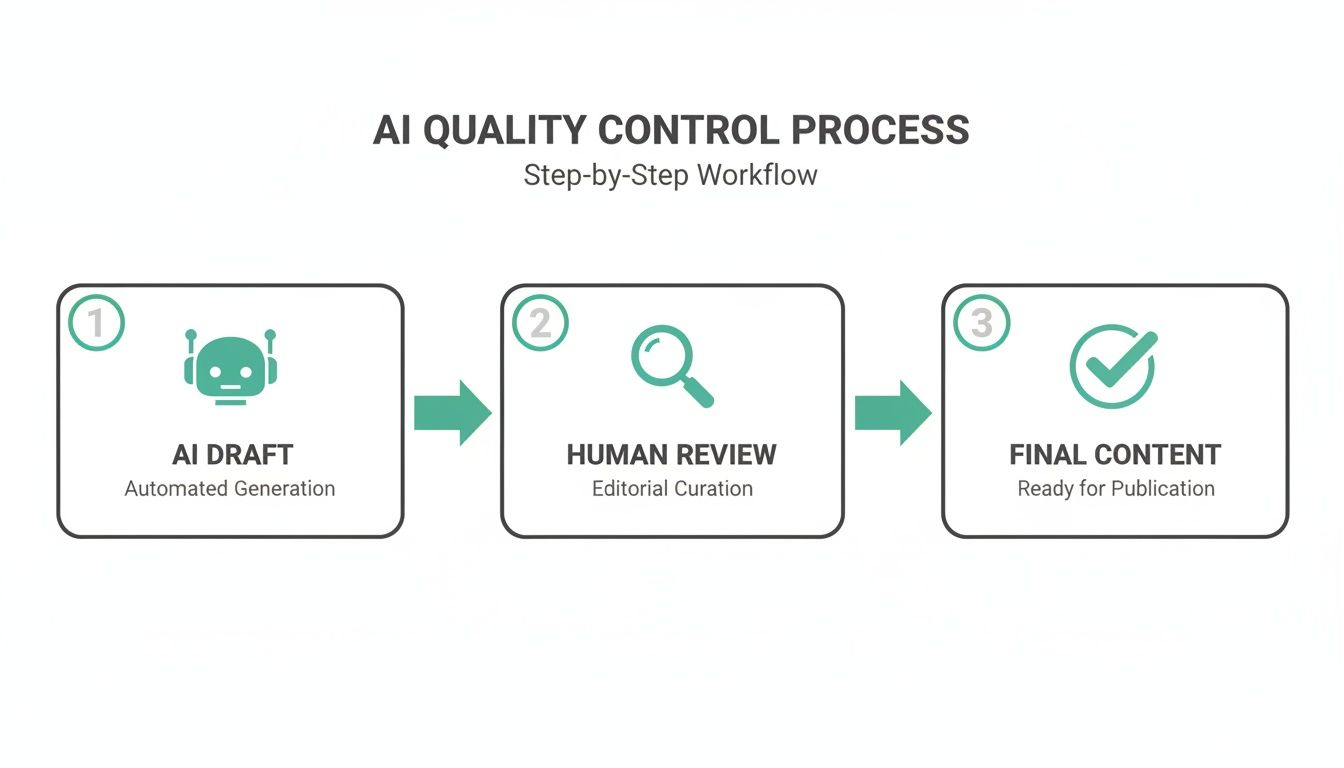
Once you’re comfortable, the real key is measurement. You need to know if your efforts are actually moving the needle. A platform like Riff Analytics is built for this, letting you see the direct impact of your AI assisted work. This simple quality check ensures that you get the speed of AI without sacrificing the accuracy and authority your audience trusts. Tracking how often your brand shows up in AI answers is no longer a "nice to have"—it's how you stay ahead.
Summary of Key Takeaways
Using ChatGPT for SEO optimization is about leveraging AI as a powerful co pilot. The key to success is integrating it thoughtfully into your workflow to handle tasks like keyword research, content brief creation, and technical SEO, which frees you to focus on high level strategy. Always maintain human oversight to ensure accuracy, originality, and brand voice. As search evolves into an answer-centric ecosystem, mastering Answer Engine Optimization (AEO) and using LLM tracking tools to measure your "answer share" will be critical for maintaining visibility and authority in 2025 and beyond.
Frequently Asked Questions About ChatGPT for SEO
What are the best prompts for using ChatGPT in SEO keyword research?
Effective prompts are specific and persona driven. For example: "Act as an SEO strategist for a B2B software company. Generate a list of 50 long tail keywords related to 'AI powered data analytics' that address user pain points. Group them into semantic clusters based on user intent (informational, transactional, commercial)."
How can I use ChatGPT to improve my on-page SEO optimization?
Use ChatGPT to generate optimized meta titles and descriptions by providing your target keyword and a page summary. You can also ask it to create FAQ sections based on your topic or generate Schema markup in JSON-LD format to enhance your SERP appearance. Always validate the output before implementation.
Can Google penalize my site for using AI generated content for SEO?
Google's policy is to reward high quality, helpful content, regardless of how it's created. The risk isn't from using AI, but from publishing low quality, unedited AI output. To stay safe and effective, always use AI content as a first draft and heavily edit it to add your unique expertise, facts, and brand voice (E-E-A-T).
What is the difference between SEO and Answer Engine Optimization (AEO)?
SEO focuses on ranking web pages in traditional search engine results pages (SERPs). AEO, a key part of generative SEO, focuses on getting your brand and content cited as the authoritative source directly within AI generated answers, like those from ChatGPT or Google's AI Overviews.
How do I track if my ChatGPT SEO efforts are working?
Traditional rank trackers are insufficient. You need to use specialized LLM tracking platforms like Riff Analytics. These tools measure your "answer share"—how often your brand is cited in AI responses for your target topics—giving you a clear metric for success in the new AI search landscape.