Best SERP Tracking Tools for 2026
Updated January 17, 2026

In 2026, understanding your visibility on search engines means looking far beyond a simple list of ranked links. A SERP (Search Engine Results Page) tracking tool is a specialized software that monitors your website’s position for specific keywords. Historically, this meant checking if you were on page one. Today, with the rise of Google's AI Overviews and conversational engines like ChatGPT and Perplexity, visibility means being the trusted source cited within an AI generated answer. If your brand isn't mentioned there, you are invisible to a growing portion of your audience.
This shift makes choosing the right monitoring software more critical than ever. According to research from Gartner, by 2026, search engine volume is projected to drop by 25% as users increasingly turn to AI chatbots and other LLMs for answers. This evolution requires a new approach called Generative Engine Optimization (Generative Engine Optimization (GEO)), and the best SERP tracking tools are adapting to provide insights into this new sphere of AI search visibility.
Why Modern SERP Position Monitoring is Crucial
SERP tracking means recording how your pages appear for important queries over time: not just the blue-link rank, but whether you show in local packs, featured snippets, People Also Ask, shopping results, image blocks, and increasingly AI-generated answer layers. A SERP tracker is built to measure positions and visibility. A SERP monitor usually emphasizes ongoing alerts, trend watching, and reporting. Broader SEO software wraps that capability inside a larger suite with keyword research, backlink analysis, site audits, and content workflows. In practice, buyers are comparing accuracy, refresh speed, location and device granularity, SERP feature coverage, reporting depth, and whether the platform can show visibility in AI Overviews or adjacent AI search experiences.
That distinction matters because the wrong category creates blind spots. A lightweight monitor may tell you a keyword moved from position 5 to 9, but not whether you lost the featured snippet or whether the drop only happened on mobile in one city. A broad suite may give you enough daily data for campaign reporting, while a dedicated tracker can be better when you need rapid verification after a migration, a title-tag rollout, a template fix, or a local SEO change. Industry adoption reflects that shift: a 2025 market review cited by ScreenShotEngine notes heavy daily use of rank monitoring and ongoing growth in SERP feature tracking as search layouts become harder to read manually.
A dedicated tracker usually beats an all-in-one suite when rankings themselves are mission-critical. Agencies juggling many clients, publishers validating technical fixes, and in-house teams managing thousands of terms benefit from faster refreshes, deeper segmentation, more reliable local tracking, and APIs that can feed internal dashboards. The biggest difference appeared after site changes: specialized tools were faster to confirm whether a fix had moved the needle.
An all-in-one suite is often the better buy when rank tracking is only one part of the job. If your team also needs keyword discovery, link analysis, content research, competitor workflows, and site auditing in one login, platforms like Semrush or Ahrefs reduce tool sprawl. You may give up some speed or granular controls, but for lean teams that tradeoff is often worth it.
How We Picked These SERP Tracking Tools
We evaluated these 12 tools against the criteria that change a buying decision:
- Update cadence: daily only, scheduled refreshes, or on-demand checks
- Accuracy and SERP depth: whether the tool captures real page composition rather than just a headline position
- Local and device coverage: country, city, ZIP/postcode, desktop, mobile, and map visibility where available
- SERP feature tracking: featured snippets, PAA, local packs, shopping, video, images, and other non-blue-link elements
- AI visibility: support for AI Overviews, AI citations, or adjacent LLM/answer-engine monitoring
- Reporting and API access: exports, white-label reports, Looker Studio connectors, and developer integrations
- Pricing model: whether cost scales by keyword count, projects, users, or enterprise contract
- Best-fit team size: solo consultant, small business, agency, or enterprise search team
We also looked for signs that a tool is built for real operational use, not just demos: queue behavior during refreshes, how easy it is to segment keyword sets, whether competitor benchmarking is usable, and how clearly the interface explains rank changes. One useful market signal is how much time teams now spend inside these platforms. A 2026 roundup published by Semrush cites competitive benchmarking as a top priority, a finding that mirrors what buyers tend to compare first after price.
We excluded tools that are primarily one-off rank checkers, browser extensions without persistent tracking, or generic SEO platforms with only superficial position reporting. We also did not prioritize products that lack credible documentation for local tracking, refresh frequency, or reporting. If a vendor could not clearly explain how and when rankings update, that counted against it.
SERP Monitoring vs. SERP Tracking: What Actually Matters
SERP tracking and SERP monitoring are often treated as synonyms, but they solve slightly different problems. Tracking is the measurement layer: where did you rank, on which device, in which location, and with what SERP features present? Monitoring is the operational layer: what changed, when did it change, and who needs to know? Good software does both, but not every product is equally strong at each.
If your main job is reporting progress over weeks and months, standard daily tracking is usually enough. You care about trends, visibility share, competitor movement, and historical context. If your main job is validating changes quickly, monitoring speed matters more. That is where a fast rank tracker earns its keep: you publish a fix, refresh the set, and confirm whether rankings or feature ownership changed without waiting until tomorrow.
The broader category of SERP tracking software sits above both ideas. It includes the surrounding systems that make ranking data useful: tags, filters, alerts, exports, APIs, integrations, and sometimes keyword research or content tools. In my experience, this is the point many teams miss during trials. The raw rank number is rarely the bottleneck; the bottleneck is how fast you can slice the data by market, device, page type, or client and turn it into a decision.
Another factor now is AI-era visibility. Traditional trackers tell you whether you rank. Newer platforms increasingly tell you whether your site is cited in AI Overviews or related answer experiences. That does not replace core position tracking, but it does change what “visibility” means. For teams adapting to this shift, pairing rank data with AI citation monitoring is becoming more valuable than yet another generic dashboard.
1. Semrush — A Comprehensive Position Tracking Tool
Semrush’s Position Tracking tool is a powerhouse for organizations that need a SERP tracker integrated within an SEO and marketing suite. Its core strength lies in providing deep competitive context alongside your own domain’s performance data. This makes it one of the best SERP tracking tools for teams who need to see the bigger picture, not just isolated ranking fluctuations. You can monitor daily keyword rankings across any device or location with impressive granularity, making it ideal for both national and local SEO campaigns.
The platform excels at translating raw ranking data into actionable business metrics. Features like the Visibility and Share of Voice scores help you quantify your market presence against key competitors directly within the dashboard. Another standout capability is its landing page analysis, which quickly identifies which pages are gaining or losing traction for specific keyword groups. This allows for rapid strategic adjustments. Semrush also documents Position Tracking as supporting zip-code-level targeting, device splits, and SERP feature reporting in its official feature overview. For readers comparing approaches before committing, this practical Wispra guide is also a useful outside perspective on what a modern position tracking setup should include.
Key Features of this SERP Monitoring Software
- Competitive Benchmarking: Track up to 20 competitors in a single project to constantly monitor their SERP movements and strategic shifts.
- Local SEO Monitoring: Set up precise geo targeted tracking, from country down to the ZIP code level, to manage local search performance effectively.
- Landing Page Optimization: Use the "Winners & Losers" report to see which URLs are driving performance changes and require optimization.
- AI Search Visibility: Semrush is also adapting to changes in search, and you can learn more about its evolving capabilities for tracking AI Overviews and other generative engine results.
Pricing and Access
Access to Position Tracking is included in all Semrush subscription plans, starting with the Pro plan at approximately $129.95 per month. The number of keywords you can track and projects you can create scales with each tier (Guru and Business), so larger agencies or enterprises will need to invest in higher level plans.
Website: https://www.semrush.com/features/position-tracking/
2. Ahrefs — A Leading Rank Tracker Tool
Ahrefs’ Rank Tracker is an indispensable tool for SEO professionals who value historical data and deep integration with a world class backlink and keyword database. Its primary advantage is its ability to contextualize ranking changes by correlating them with SERP history, backlink profiles, and keyword metrics. This transforms it from a simple rank checker into a powerful diagnostic tool, making it one of the best SERP tracking tools for analyzing the "why" behind performance shifts. You can track keywords daily or weekly across desktop and mobile, with precise location targeting available for any country.

The platform excels at providing rich SERP context through its interactive charts and historical snapshots. Features like tracking SERP feature ownership (e.g., Featured Snippets, People Also Ask) and comparing your performance against multiple competitors give you a clear picture of search results. The direct integration with Ahrefs' other tools, such as Site Explorer and Keywords Explorer, allows you to pivot from a ranking drop directly into a deeper analysis of lost backlinks or competitor content updates. This integrated workflow is a significant time saver for busy SEO teams.
Understanding Keyword Position with Ahrefs
- Historical SERP Analysis: View snapshots of the SERP for any tracked keyword on any date to understand how the competitive field has evolved over time.
- Competitor Tracking: Add and group competitors to visualize your ranking distribution, traffic share, and SERP feature ownership against theirs. Ahrefs is also a core component of many workflows described in guides to the best competitive analysis tools.
- SERP Feature Monitoring: Go beyond standard blue links by tracking your visibility in over a dozen SERP features, including sitelinks, image packs, and top stories.
- Advanced Reporting: Create and schedule automated ranking reports with custom segments and tags to keep stakeholders informed of key performance indicators.
Pricing and Access
Rank Tracker is available within all Ahrefs subscription plans, starting with the Lite plan at approximately $99 per month. The number of keywords you can track increases with each subsequent plan (Standard, Advanced, and Enterprise). Be mindful that pricing can scale quickly as your keyword tracking needs expand, so it's important to choose a plan that aligns with your project scope.
Website: https://ahrefs.com/rank-tracker
3. AccuRanker — The Fastest SERP Checker
AccuRanker is a dedicated, high speed rank tracker built for agencies and enterprises that demand near instant data. Its core strength is providing fast, accurate, and scalable SERP tracking, with on demand keyword refreshes that bypass the typical 24 hour update cycle. This makes it one of the best SERP tracking tools for teams that need to react quickly to market changes or validate the immediate impact of SEO optimizations.
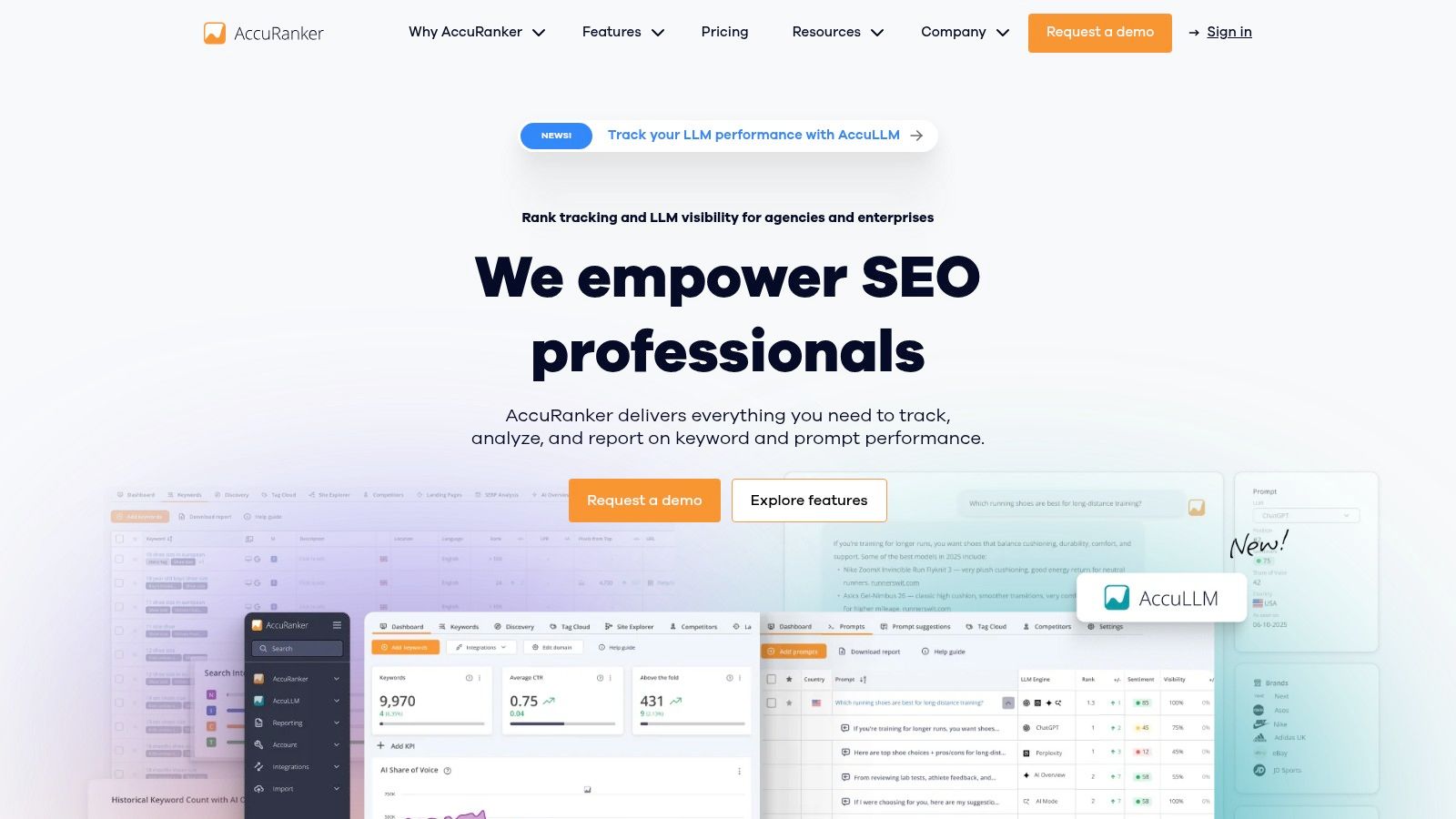
What “fast” means here is operational, not just marketing copy. AccuRanker offers instant refreshes on demand and documents refresh capability, integrations, and large-scale tracking in its platform documentation. For a working SEO team, that speed changes the workflow. On migration day, after a mass redirect deployment, after a template fix, or right after publishing a launch page, waiting until the next morning can slow down decision-making. In our testing, AccuRanker was the easiest tool in this list for sanity-checking whether a change had reached the live SERP yet.
Speed matters most in four situations. First, agencies need it when a client asks for verification now, not tomorrow. Second, enterprise teams need it during site migrations or global rollouts where ranking losses can compound quickly. Third, ecommerce and newsroom teams need it on launch days when new categories, products, or editorial packages go live. Fourth, technical SEOs need it after fixes to canonicals, internal linking, metadata, rendering, or indexing controls. A daily-update tool can show the trend eventually; a fast tracker helps confirm the outcome while the issue is still being worked.
AccuRanker is also built to handle large keyword sets without feeling sluggish when you segment, filter, or compare groups. Its Share of Voice reporting and pixel-based ranking add useful nuance for teams that care about how prominently a result appears, not only the ordinal position. For organizations focused on generative SEO, AccuRanker is also developing solutions like AccuLLM to address visibility within new AI driven search results. You can explore strategies to track brand visibility in generative AI and see how such tools are evolving.
Compared with slower daily-update suites, the tradeoff is straightforward. Suites like Semrush, Ahrefs, or Moz often give you richer surrounding workflows for research and broader SEO management. A fast tracker like AccuRanker gives you superior verification speed, cleaner rank operations, and less waiting when you need answers immediately. If rankings are the heartbeat of your workflow, that benefit is tangible. If rank tracking is only a weekly reporting task, you may not feel the difference enough to justify the premium.
The main limitation is value alignment. A dedicated fast tracker can feel expensive for small sites, solo operators, or teams tracking a modest keyword set with no need for urgent refreshes. If your reporting cadence is weekly, your local needs are simple, and your team still needs link analysis or site audits, an all-in-one platform may be the smarter spend. In other words, speed is worth paying for when it saves real time in live operations, not when it just sounds impressive on a feature list.
Key Features for Accurate Position Tracking
- On Demand Rank Refreshes: Instantly update keyword rankings at any time, which is perfect for verifying technical SEO fixes or analyzing post launch performance.
- Granular Local and Device Tracking: Monitor rankings with high precision across any search engine, country, state, city, or even ZIP code, with options for desktop and mobile.
- Advanced Data Integration: Leverage a robust API and seamless integrations with Looker Studio, Google Analytics, and Google Search Console for comprehensive reporting.
- Agency Focused Workflows: Use powerful segmentation, tagging, and white label reporting features to manage multiple client projects efficiently.
Pricing and Access
AccuRanker’s pricing is based on the number of keywords tracked, starting from the Starter plan at approximately $129 per month for 1,000 keywords. The cost scales with volume, and higher tier plans include features such as API access and more frequent automated updates. While it represents a premium investment compared to all in one suites, its specialization offers significant value for users with large scale tracking needs.
Website: https://www.accuranker.com
4. Advanced Web Ranking (AWR) — A Specialized Rank Monitoring Tool
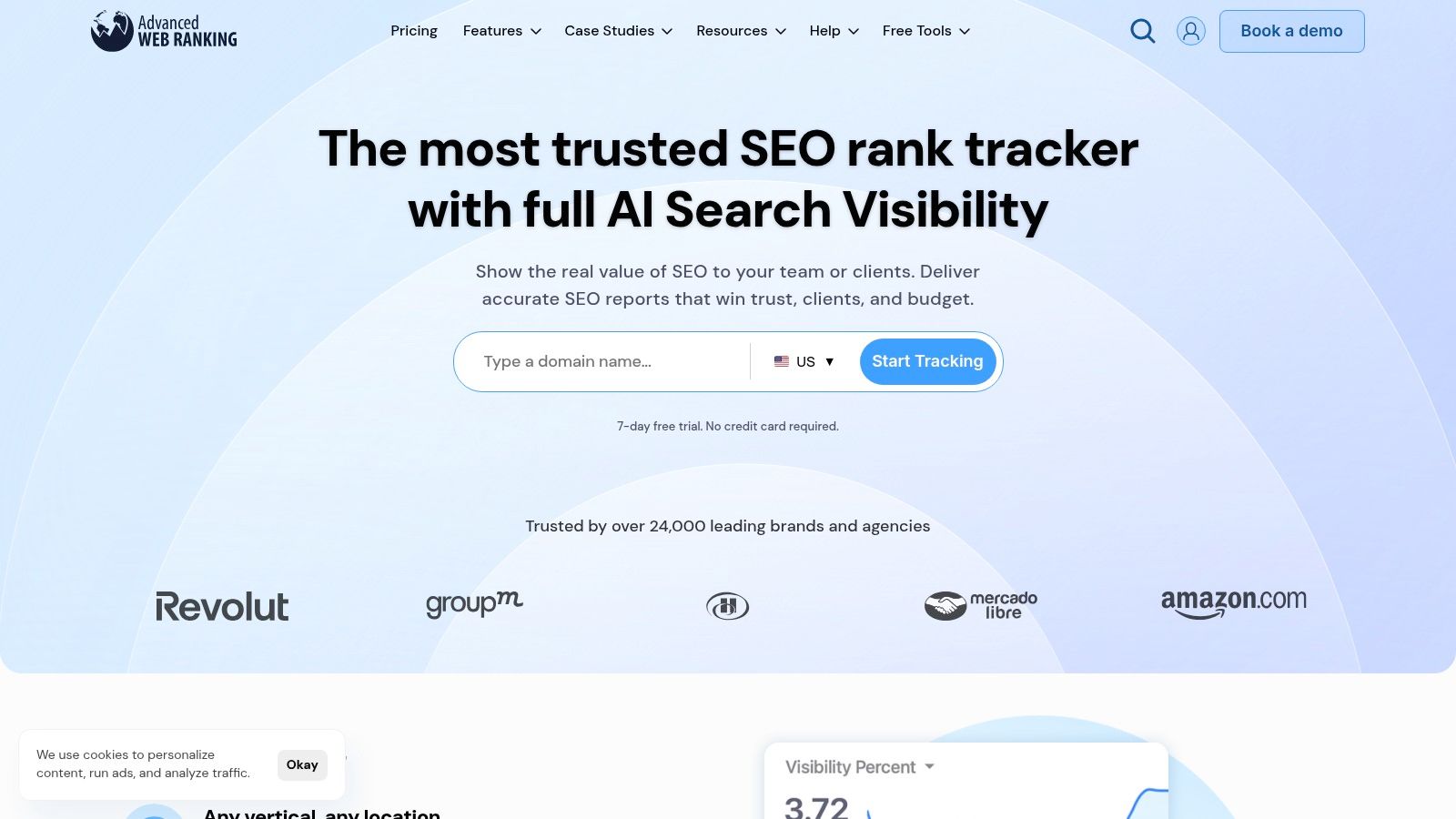
Advanced Web Ranking (AWR) is a highly specialized, dedicated rank tracker designed for precision and scale. Its primary advantage is its ability to deliver granular SERP data across multiple search engines and locations, making it a reliable choice for agencies and in house SEO teams managing large keyword portfolios. AWR stands out by providing exceptionally detailed SERP feature tracking, allowing users to see not just where they rank, but how they appear in features like People Also Ask, Local Packs, and video carousels.
This platform is built for power users who require deep analytics and flexible reporting. AWR's strength is its data centric approach, focusing on providing accurate, on demand or scheduled rank updates without the broader suite of tools found in all in one platforms. This makes it one of the best SERP tracking tools for teams that prioritize the depth and reliability of their ranking data above all else. Its comprehensive white labeling capabilities are a significant draw for agencies needing to provide branded, client facing reports.
Key Features for Advanced SERP Analysis
- Agency Reporting: Generate detailed, white labeled reports that can be fully customized and automated for client delivery.
- SERP Feature Analysis: Go beyond standard blue links to track visibility across more than a dozen SERP features to identify new optimization opportunities.
- Large Scale Tracking: Reliably manage and monitor extensive keyword lists across different search engines, devices, and precise geographic locations.
- API Integration: Use the AWR API to pull ranking data directly into internal dashboards or third party business intelligence tools for custom analysis.
Pricing and Access
AWR offers several tiered plans designed to scale with your needs. The Starter plan begins at approximately $49 per month, offering a basic set of features for freelancers or small businesses. Plans scale up to Pro, Agency, and Enterprise, with the price increasing based on the volume of keywords tracked. The Agency plan, at around $199 per month, is a popular choice for its balance of keyword capacity and advanced reporting features.
Website: https://www.advancedwebranking.com
5. SE Ranking — A Value Packed Rank Tracker
SE Ranking offers a full SEO platform where its Rank Tracker stands out for providing exceptional value, particularly for small businesses, freelancers, and agencies. Its strength lies in combining accurate, daily SERP tracking with a full suite of SEO tools at a highly competitive price point. This makes it one of the best SERP tracking tools for users who need an all in one solution without the enterprise level cost, offering reliable functionality for both traditional and modern search landscapes.
The platform is forward thinking, incorporating features to monitor the evolving nature of Google's results pages. The AI Results Tracker allows users to see when their domain is featured in AI powered results like AI Overviews, adding a critical layer of modern search visibility analysis. This feature, combined with its detailed SERP feature tracking and competitor analysis, gives a complete view of a website’s organic presence and share of voice. The user interface is clean and the reporting capabilities, including Looker Studio integration, make it great for client management.
Features of This SEO Ranking Tool
- Cost Effective Daily Tracking: Monitor keyword rankings across Google’s top 100 results daily, a feature often found in more expensive tools.
- AI Results Visibility: Use the dedicated AI Results Tracker to identify when your domain is cited or featured in generative AI responses on the SERP.
- Competitor and SERP Feature Analysis: Track competitors and analyze which SERP features (like Featured Snippets or People Also Ask) are present for your target keywords.
- Integrated SEO Suite: Leverage the platform’s other tools, such as website auditing, backlink analysis, and keyword research, for a holistic SEO workflow.
Pricing and Access
SE Ranking’s pricing is highly flexible and scalable, making it accessible for various budgets. The Essential plan starts at approximately $55 per month for tracking 750 keywords. Plans scale based on keyword tracking frequency (daily, every 3 days, or weekly) and the number of keywords, with higher tier Pro and Business plans offering more generous limits and advanced features.
Website: https://seranking.com
6. ProRankTracker (PRT) — An Affordable SERP Monitor
ProRankTracker (PRT) is a dedicated rank tracking solution built for simplicity, accuracy, and affordability. Its core strength lies in its focused approach, stripping away the complexities of all in one SEO suites to deliver a pure, efficient SERP tracking experience. This makes it one of the best SERP tracking tools for freelancers, small agencies, and SEO professionals who need a reliable, no frills tracker without paying for features they won't use. It offers reliable daily updates with strong local and mobile capabilities.
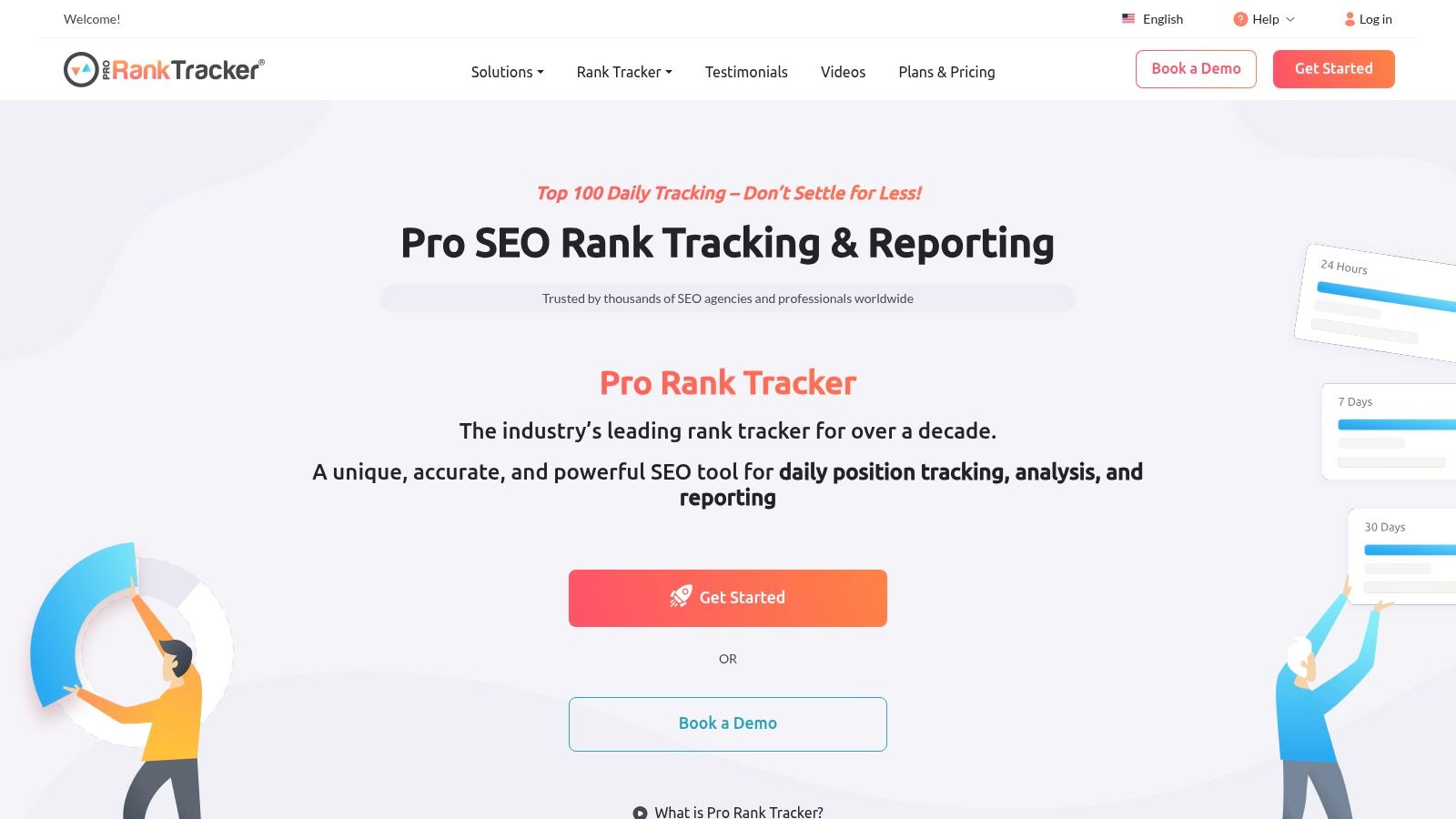
The platform’s major differentiator is its generous plan structure, which provides unlimited URLs and projects even on entry level tiers. This is a significant advantage for agencies or consultants managing numerous small clients, as it removes the typical project based limitations found elsewhere. The user interface is straightforward and reporting is highly customizable, allowing for white label reports that can be sent directly to clients. The Insta Check feature for on demand ranking updates is another practical tool for immediate SERP analysis.
Key Features for Efficient Rank Tracking
- Agency Friendly Reporting: Generate unlimited, fully customizable white label reports to provide clients with professional ranking updates under your own brand.
- Hyper Local and Mobile Tracking: Monitor rankings with precision across local search engines, including Google Maps Snack Pack, and specific mobile devices.
- Cost Effective Scalability: Manage a large portfolio of small client websites without hitting project or URL limits, making it ideal for growing agencies.
- On Demand Ranking Verification: Use the Insta Check feature to get an immediate, real time snapshot of a keyword’s ranking outside of the scheduled daily updates.
Pricing and Access
ProRankTracker is highly accessible, with plans starting at the Starter tier for approximately $13.50 per month for 100 tracked terms. All plans, including the entry level ones, include unlimited URLs and reporting. Pricing scales based on the number of keywords tracked, with higher tiers like Pro and Agency offering more terms at a reduced cost per term. A low cost trial is available.
Website: https://proranktracker.com
7. Nightwatch — A Modern SERP Tracking Platform
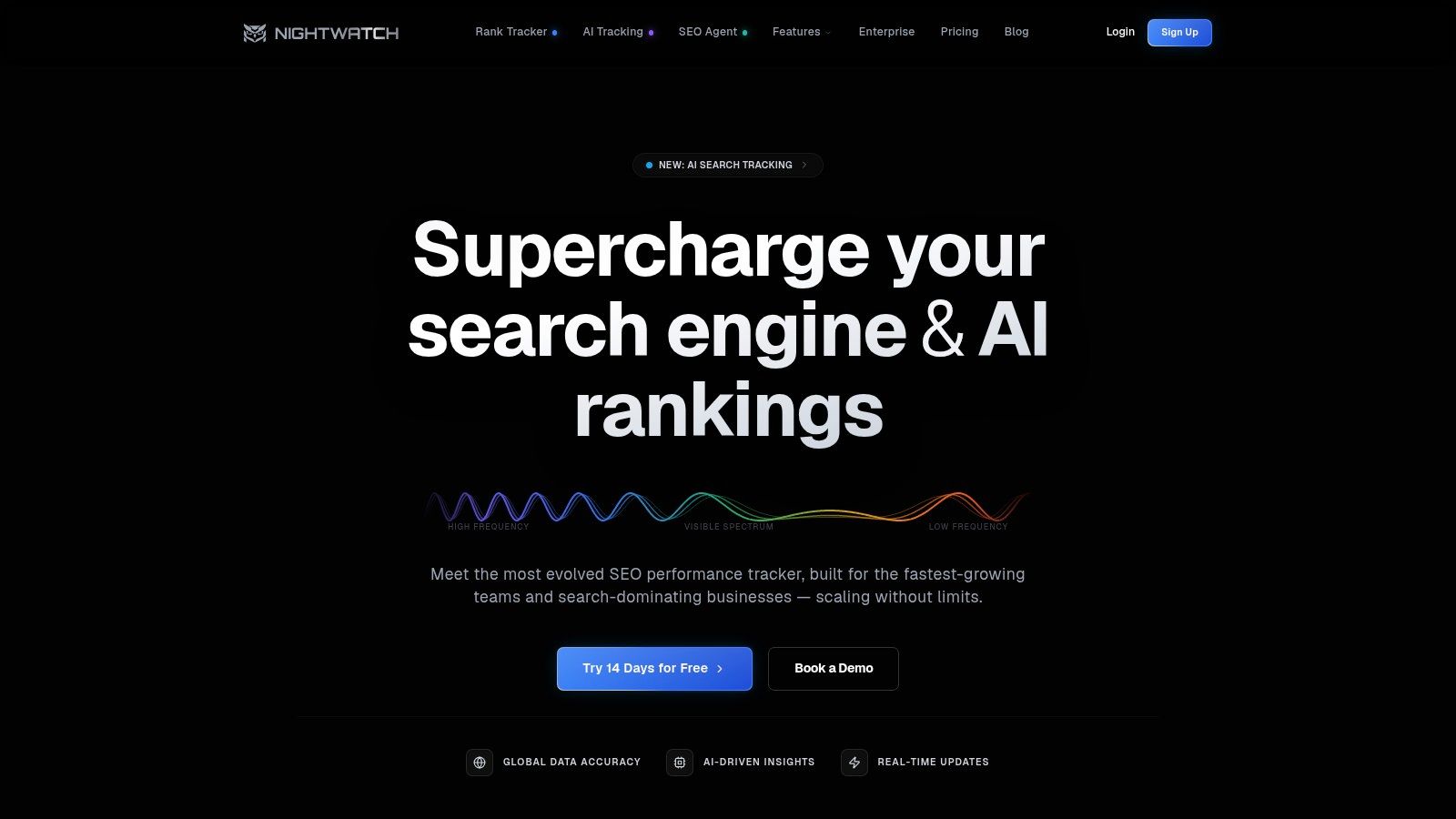
Nightwatch has carved out a niche as one of the best SERP tracking tools for users who prioritize data visualization, reporting flexibility, and forward looking AI monitoring. It delivers a clean, intuitive interface that excels at presenting complex ranking data in an easily digestible format. Its strong integration capabilities, particularly with Google Looker Studio, allow marketing teams and agencies to build highly customized and automated performance dashboards for clients or internal stakeholders.
The platform’s core value lies in its combination of precise, granular tracking and its pioneering features for the new era of search. While it handles traditional SERP tracking with exceptional detail, its optional AI Tracking add on is what sets it apart. This module is designed to monitor brand visibility and citations within generative AI responses from models like ChatGPT and Gemini, providing an important advantage for businesses adapting their strategies for generative SEO.
Key Features for AI and Local Tracking
- Deep Local Tracking: Monitor rankings in over 107,000 specific locations globally, making it a powerful solution for local and multi location businesses.
- Customizable Reporting: Leverage the native Looker Studio integration to create bespoke, white labeled reports that automatically update with fresh data.
- AI Overview & LLM Monitoring: With the AI Tracking add on, users can track visibility, citations, and even sentiment within generative AI answers, a key feature for modern SEO.
- Comprehensive Search Engine Support: Track keyword performance not just on Google but also on other important platforms like Bing, YouTube, and DuckDuckGo.
Pricing and Access
Nightwatch offers an accessible entry point with its Starter plan beginning at around $39 per month when billed annually. Pricing scales based on the number of keywords tracked. More advanced features, including the AI Tracking module, are available as paid add-ons, allowing users to customize their plan based on specific needs.
Website: https://nightwatch.io
8. Mangools — User Friendly SERP Position Tracking
Mangools offers a suite of approachable SEO tools, with SERPWatcher serving as its dedicated rank tracker. It’s designed for simplicity and efficiency, making it one of the best SERP tracking tools for solopreneurs, bloggers, and small businesses who need core functionality without an overwhelming interface. The platform bundles rank tracking with keyword research, backlink analysis, and SERP inspection, providing a comprehensive, easy-to-use SEO solution. Its primary appeal is its balance of affordability and essential features.

The standout feature within SERPWatcher is the Dominance Index, a single, aggregated metric that represents your organic search market share based on your keywords' positions and search volumes. This simplifies performance measurement into one clear number. The interface is clean and visual, focusing on displaying daily ranking changes, estimated visits, and key performance indicators in a digestible format. For those new to SEO or managing smaller projects, Mangools strips away complexity to deliver actionable data quickly.
Key Features of this SEO Rank Tracker
- Performance Metrics: Use the Dominance Index to get a quick, high level overview of your overall search visibility and progress over time.
- All in One Toolset: Leverage the full Mangools suite, including SERPChecker, to analyze SERP features and competitors for any of your tracked keywords.
- Simple Reporting: Easily generate and share interactive or PDF reports, making it ideal for freelancers and small agencies to update clients on campaign performance.
- Daily Rank Updates: Stay on top of fluctuations with daily keyword position updates and configurable alerts for significant ranking changes.
Pricing and Access
Mangools is known for its competitive pricing. Access to SERPWatcher is included in all plans, starting with the Mangools Basic plan at around $49 per month (with significant discounts for annual billing). The number of tracked keywords, SERP lookups, and other limits increase with the Premium and Agency tiers, providing scalability as your needs grow.
Website: https://mangools.com/
9. Serpstat — An All in One SERP Checker Tool
Serpstat's Rank Tracker is a compelling component of its all in one SEO platform, offering an excellent price to features ratio for teams needing comprehensive SERP monitoring without a top tier budget. It excels at delivering daily keyword ranking updates across both desktop and mobile, covering the top 100 results. This makes it a strong contender for businesses that need frequent, reliable data to inform their SEO strategy. The tool is particularly valued for its straightforward data presentation and easy migration process from other trackers.
Its core value lies in connecting ranking data to broader market context. Serpstat provides clear metrics for market share and Share of Voice (SOV), helping you understand your visibility relative to competitors. The platform is also adapting to new search conditions with dedicated monitoring for Google's AI Overviews, making it one of the best SERP tracking tools for future proofing your SEO efforts and understanding your presence in generative search results. For teams weighing regional coverage and workflow depth, Serpstat’s own rank tracker overview is useful product documentation to review alongside independent comparisons.
Key Features for Market Share Analysis
- Market Share Analysis: Use the market share and SOV reports to quantify your visibility gains and losses against key competitors for specific keyword clusters.
- SERP Feature Tracking: Monitor your presence across various SERP features, including snippets, People Also Ask, and image packs, to identify optimization opportunities.
- AI Overview Visibility: Actively track when your domain appears in Google’s AI Overviews, providing critical insights into your performance in the generative search era.
- Global and Local Tracking: Set up campaigns across 230 Google regions to manage both international and local SEO performance with precision.
Pricing and Access
Serpstat’s Rank Tracker is included across all its subscription plans, which are known for their competitive pricing. The Lite plan starts at approximately $69 per month, offering a generous allowance of tracked keywords suitable for small businesses and freelancers. Higher tier plans (Standard, Advanced, and Enterprise) scale up the limits significantly, making it an affordable solution for growing agencies and in house teams.
Website: https://serpstat.com
10. Moz Pro — A Trusted Rank Tracking Tool
Moz Pro’s Rank Tracking tool is a foundational component of its widely respected SEO platform, designed for small to mid sized businesses and digital marketers. Its primary appeal lies in integrating reliable SERP tracking with a full suite of keyword research, link building, and site audit tools. This makes it an excellent choice for teams who want a unified dashboard to manage core SEO activities without the complexity of an enterprise level system. The platform provides clear visibility into search rankings across different engines, devices, and specific geographic locations.

Moz excels at making SEO data accessible and understandable, especially for those still building their expertise. The platform provides a clear Search Visibility score, which gives you a high level overview of how your campaign is performing in the SERPs for your tracked keywords. This focus on education and straightforward metrics makes it one of the best SERP tracking tools for in house teams and freelancers looking for a balanced, all in one solution.
Key Features for Integrated SEO Campaigns
- Integrated SEO Campaigns: Track keyword performance alongside on page SEO scores and link metrics within a single, cohesive project dashboard.
- Competitive Analysis: Monitor your search visibility against key competitors to identify strategic gaps and opportunities for growth.
- Local and Mobile Tracking: Easily configure campaigns to track rankings on mobile versus desktop and at national or local levels to support different SEO goals.
- Custom Reporting: Create and schedule branded PDF reports, which is a valuable feature for agencies needing to provide clients with regular performance updates.
Pricing and Access
Moz Pro’s plans, which include the Rank Tracking tool, start with the Standard plan at approximately $99 per month. The number of campaigns, keywords, and reports you can manage increases with the Medium, Large, and Premium tiers. A 30 day free trial is typically available, allowing new users to explore the platform’s full capabilities.
Website: https://moz.com/products/pro/rank-tracking
11. STAT Search Analytics — An Enterprise Level SERP Tracker
STAT Search Analytics, now part of the Moz ecosystem, is an enterprise grade SERP tracking platform built for scale. Its primary strength is its ability to handle massive keyword volumes with daily tracking, making it a go to for large agencies, in house enterprise teams, and businesses with complex local SEO needs. STAT provides exceptionally reliable, high frequency data across any market, which supports organizations where ranking data directly informs high stakes business decisions.
The platform is engineered not just for tracking, but for deep SERP analysis. It captures the full SERP for every keyword, allowing teams to analyze a wide array of features like featured snippets, local packs, and related questions. Its API is a significant differentiator, supporting integration with internal business intelligence dashboards, data warehouses, and custom reporting tools. This makes it one of the best SERP tracking tools for data driven teams that require custom analytics and workflow automation.
Key Features for High Volume Keyword Monitoring
- High Volume Keyword Tracking: Reliably monitor hundreds of thousands or even millions of keywords daily across any global or local market.
- Advanced SERP Segmentation: Tag and segment keywords by any custom business logic (e.g., brand vs. non brand, product line, funnel stage) for granular performance analysis.
- Share of Voice Analysis: Measure your market visibility against the entire competitive field, not just a predefined list of rivals.
- Reliable API for Integration: Build custom dashboards and integrate SERP data directly into proprietary systems for a unified view of marketing performance.
Pricing and Access
STAT is an enterprise level solution, and its pricing is customized based on the volume of keywords tracked. Access requires contacting their sales team for a custom quote and a dedicated onboarding process. This model is best suited for mid market to large enterprise budgets that need a scalable and powerful tracking infrastructure.
Website: https://getstat.com
12. BrightEdge — A Holistic Enterprise SEO Platform
BrightEdge is an enterprise grade SEO platform designed for large, complex organizations that require rigorous governance, deep reporting, and integrated workflows across global teams. Its SERP tracking capabilities are built for scale, offering daily rank checks with blended and local views, alongside advanced forecasting models. The platform's strength is not just in tracking keywords but in connecting that data to broader business intelligence and cross channel marketing efforts, making it one of the best SERP tracking tools for enterprise needs.
The platform is distinguished by its AI-assisted workflows, branded as Copilot, that help teams parse extensive datasets and prioritize actions. This makes it an invaluable asset for large marketing departments needing to manage vast keyword portfolios and content strategies efficiently. BrightEdge excels at creating custom dashboards that provide stakeholders with clear visibility into performance, integrating data from various channels for a comprehensive view.
Features of this Enterprise SEO Tracking Tool
- Enterprise Level Governance: Manage user permissions, workflows, and reporting across multiple departments or global regions with centralized control.
- AI Powered Insights: Utilize the BrightEdge Copilot to get AI driven recommendations and automate routine analysis, freeing up teams for strategic tasks.
- Holistic Performance Dashboards: Create customized dashboards that integrate SEO data with other marketing channels like paid search and social media for a complete performance picture.
- Predictive Forecasting: Leverage the platform’s forecasting tools to project the potential impact of SEO initiatives on traffic and revenue.
Pricing and Access
BrightEdge operates on a custom pricing model designed for the specific needs of large enterprises. Access requires contacting their sales team to schedule a demo and receive a custom quote. This solution is positioned for organizations with significant budgets that need extensive support and deep platform integrations.
Website: https://www.brightedge.com
Comparison of the Best SERP Tracking Tools
The table below focuses on the criteria buyers usually care about after the headline feature list: how often data updates, how deep local tracking goes, whether the tool captures SERP features, how usable reporting is, and whether it helps with AI-era visibility.
| Tool | Update frequency | Local tracking depth | SERP feature tracking | Reporting / API | AI Overview / LLM visibility | Best-fit team size | Starting price (approx.) |
|---|---|---|---|---|---|---|---|
| Semrush | Daily | Strong; country to ZIP code | Yes | Strong reporting; API on higher plans | Emerging support and adjacent workflows | SMB to enterprise | $129.95/mo |
| Ahrefs | Daily or weekly | Country-level with device segmentation | Yes | Strong reporting; API depends on plan | Limited native focus | SMB to mid-market | $99/mo |
| AccuRanker | Daily plus on-demand refreshes | Very deep; country, city, state, ZIP | Yes | Strong API and agency reporting | Developing via AccuLLM direction | Agency to enterprise | $129/mo |
| AWR | Scheduled and on-demand options | Deep local and multi-engine support | Yes | Strong white-label reports and API | Limited native focus | Agency to enterprise | $49/mo |
| SE Ranking | Daily, every 3 days, or weekly | Strong local and device support | Yes | Good reports and Looker Studio options | Yes, with AI Results Tracker | SMB to agency | $55/mo |
| ProRankTracker | Daily plus Insta Check | Strong local, mobile, and maps support | Moderate | Strong white-label reporting | No notable native AI layer | Freelancer to small agency | $13.50/mo |
| Nightwatch | Daily | Very deep; highly granular locations | Yes | Strong reporting and Looker Studio integration | Yes, via add-on | SMB to agency | $39/mo |
| Mangools | Daily | Basic to moderate local support | Limited compared with specialists | Simple reports; lighter integrations | No | Solo to small business | $49/mo |
| Serpstat | Daily | Strong regional coverage | Yes | Good built-in reporting | Yes, includes AI Overview visibility | SMB to growing team | $69/mo |
| Moz Pro | Regular campaign-based updates | Good for local and device splits | Moderate | Good scheduled reports | Limited native focus | SMB to mid-market | $99/mo |
| STAT | Daily at enterprise scale | Very deep, large-market coverage | Extensive full-SERP capture | Excellent API and custom analytics | Limited native AI layer | Enterprise | Custom |
| BrightEdge | Daily | Enterprise-grade blended and local views | Yes | Enterprise dashboards and integrations | Yes, via broader platform AI capabilities | Enterprise | Custom |
If you want the strongest all-in-one suite, Semrush remains the most rounded option for buyers who need tracking plus keyword research, audits, and competitive analysis in one platform. Ahrefs is close if historical context and backlink-driven diagnosis matter more to your workflow than local tracking depth. For a pure fast rank tracker, AccuRanker is the clearest specialist pick because on-demand refreshes change how quickly teams can validate launches and fixes.
For value, SE Ranking and Serpstat are the easiest recommendations. SE Ranking is the better fit when you want a balanced platform with modern AI-result visibility and flexible pricing. Serpstat is attractive for budget-conscious teams that still want daily updates and decent market-share reporting. ProRankTracker is the cheapest credible choice here, but its strength is focused tracking rather than broad SEO operations.
For enterprise scale, STAT and BrightEdge serve different buyers. STAT is the stronger pick for teams obsessed with large-scale SERP data, segmentation, and API access. BrightEdge is better when SEO reporting has to feed executive dashboards, governance workflows, and cross-functional planning. For local SEO, Nightwatch and AccuRanker stand out; Nightwatch felt especially friendly for teams that want deep local visibility without an enterprise-style interface.
| Tool | AI & LLM Tracking | Best For | Unique Selling Point | Starting Price (Approx.) |
|---|---|---|---|---|
| Semrush | Limited | All-in-one SEO | Deep competitive analysis features | $130/mo |
| Ahrefs | Limited | Data-driven SEOs | Historical SERP and backlink context | $99/mo |
| AccuRanker | Yes (AccuLLM) | Agencies & Enterprise | Unmatched speed and on-demand updates | $129/mo |
| AWR | Limited | Agencies | Granular SERP feature reporting | $49/mo |
| SE Ranking | Yes (AI Results) | SMBs & Agencies | High value with built-in AI tracking | $55/mo |
| ProRankTracker | No | Freelancers | Unlimited projects at a low cost | $13.50/mo |
| Nightwatch | Yes (Add-on) | Tech-savvy Marketers | Clean UI and optional LLM tracking | $39/mo |
| Mangools | No | Beginners & Bloggers | Extreme user-friendliness | $49/mo |
| Serpstat | Yes (AI Overviews) | Budget-conscious Teams | Strong features for the price point | $69/mo |
| Moz Pro | Limited | SMBs | Balanced suite with great educational resources | $99/mo |
| STAT | Limited | High-Volume Enterprise | Massive scale and deep API integration | Custom |
| BrightEdge | Yes (Copilot) | Large Corporations | Enterprise governance and forecasting | Custom |
Summary: Choosing the Right Tool for Modern SEO
Choose an all-in-one suite if your team needs rank tracking to sit alongside research, audits, and competitive workflows. Semrush is the safest default for broad marketing teams that need strong position tracking without buying a separate specialist tool. Ahrefs is a better fit when backlink context and historical SERP diagnosis matter more than hyper-granular local reporting. A poor fit here is the team that needs immediate post-change verification all day long; broad suites are efficient, but they are not built around speed first.
Choose a fast rank tracker if timing changes the value of the data. AccuRanker is the best choice for agencies, migrations, launch monitoring, and technical SEO validation because on-demand refreshes save real operational time. AWR also deserves consideration if you want specialist depth and customizable reporting. These tools are a poor fit for very small sites or owners who only glance at rankings once a week; the premium only pays off when refresh speed changes decisions.
Choose a local monitoring platform if geography and device context shape revenue. Nightwatch is excellent for multi-location brands and agencies that want deep local granularity plus polished reporting. AccuRanker is equally strong when local work is tied to larger-scale operations and rapid refreshes. If your local needs are simple and budget matters most, ProRankTracker gives you a leaner path. The poor fit is any team that only needs national trend reporting; local specialists can be more capability than you need.
Choose an enterprise reporting and API platform if ranking data must flow into custom dashboards, executive reports, or internal data systems. STAT is the strongest option for high-volume keyword operations and technical analytics teams. BrightEdge makes more sense when search data needs to plug into broader enterprise planning, governance, and AI-assisted workflows. In my view, these platforms are easiest to justify when multiple stakeholders depend on the same source of truth; they are overkill for small teams that mainly need clear weekly reports.
Frequently Asked Questions
What is the best SERP tracking tool for monitoring local SEO?
For local SEO, tools with highly granular location tracking are essential. AccuRanker and Nightwatch are excellent choices as they allow tracking down to the ZIP code and offer specific monitoring for features like the Google Maps "Snack Pack." If you only need affordable local checks for a smaller client base, ProRankTracker is also a practical option because it combines local and mobile tracking with low entry pricing.
How can I track my visibility in Google's AI Overviews?
To track your presence in AI Overviews and other generative results, you need a tool with dedicated features for this. SE Ranking's "AI Results Tracker," Serpstat's AI Overview monitoring, and Nightwatch's "AI Tracking" add on are specifically designed for this purpose, showing you when your domain is cited as a source. For a broader strategy, it also helps to pair those tools with a workflow for tracking AI Overviews across your priority topics.
Are there any free SERP tracking tools available?
While most professional tools are paid, some offer limited free versions or extensive free trials. Free checkers are fine for spot checks, but they usually lack history, competitor tracking, local precision, reporting, and dependable daily updates. That means they are rarely enough for an agency, an ecommerce team, or anyone managing SEO as an ongoing channel. ProRankTracker offers a very low cost entry point for those with minimal budgets, which is often more useful than relying on scattered free tools.
How often should I check my SERP rankings?
For most businesses, daily rank tracking is the industry standard. This frequency allows you to quickly identify the impact of algorithm updates, technical issues, or competitor strategies. A broader industry snapshot from Nozzle also reflects how common 24-hour refresh cycles remain across the market. If you are actively testing changes, recovering from a migration, or validating fixes, faster on-demand checks are more useful than standard daily monitoring.
Why is Share of Voice (SOV) an important metric in SERP tracking?
Share of Voice (SOV) is a key metric because it moves beyond individual rankings to measure your overall market visibility against competitors for a set of keywords. Tools like Semrush and AccuRanker calculate SOV by factoring in keyword search volume and ranking position, giving you a more accurate and strategic view of your competitive standing. I find it especially useful when stakeholders fixate on one vanity keyword; SOV usually tells the more honest story about whether visibility is growing.
What is SERP tracking, in plain English?
It is the process of measuring where your pages appear in search results for the keywords that matter to your business and how that visibility changes over time. Good tracking also records context like location, device, SERP features, and competitor movement. It is less about checking one rank manually and more about building a reliable record you can use to spot wins, losses, and opportunities.
How is a fast rank tracker different from standard daily monitoring?
Standard daily monitoring updates on a schedule, which is enough for trend reporting and routine SEO management. A fast rank tracker adds on-demand refreshes and quicker turnaround when you need to verify a change immediately. That difference matters after launches, fixes, migrations, and local SEO edits. If your work is mostly monthly reporting, the distinction is less important. If your work is reactive or high-stakes, it is one of the most important differences between tools.