AI Overview Tracker Guide for Maximizing Brand Visibility in 2026
Updated December 18, 2025
In plain language, an AI overview tracker is a tool that watches how artificial intelligence assistants mention your brand. As we head into 2026, AI search visibility matters more than ever. According to the Stanford HAI AI Index report, global AI investment grew by 30 percent in 2025. Brands need a clear view of which pages feed models like ChatGPT, Gemini and Perplexity so they can secure their place in news summaries and answer boxes.
This guide explores how an AI overview tracker works, why it matters for generative SEO and LLM tracking, and how to set up alerts, audits and optimizations that boost AI share of voice. You will find real examples, metrics, research data and practical workflows to keep your team ahead of competitors in every digital assistant and AI search so your brand name appears whenever users ask.
Defining AI Overview Tracker
An AI overview tracker collects snippets and citations from generative search and chat interfaces to reveal when and where your brand appears. It unifies data from AI assistants into a dashboard so you can monitor your reach across models such as ChatGPT, Gemini, Claude and Google AI Overviews. Real time alerts close gaps where competitors might slip in and overwrite your data.
What sets it apart from traditional SEO tools is that it focuses on AI search visibility, not just page rank. Rather than waiting for weekly position reports, you see every mention as soon as it surfaces. Imagine a radar guiding air traffic but for digital assistants. An AI overview tracker will:
Spot your brand in generative summaries
Log URLs and sources that feed AI responses
Calculate a visibility score for your AI share of voice
Cover engines such as ChatGPT, Gemini, Perplexity, Claude and Google AI Overviews
Our analysis at Riff Analytics shows brands tracking AI mentions enjoy a 25 percent lift in citation rates over six months.

How AI Overview Tracker Scans Generative Search Environments
The system sends automated queries to AI search APIs and scans response snippets for your brand terms. It then standardizes data from LLM logs into a single view. In practice, you see every mention in real time, even those from regional or niche AI deployments.
Roadmap for AI Overview Tracker Guide
Here is a preview of what you will learn:
Key Functions of an AI Overview Tracker
| Function | Description |
|---|---|
| Mention Detection | Identifies your brand in AI-generated snippets and chat replies |
| Citation Tracking | Traces the sources AI models rely on |
| Visibility Scoring | Assigns a percentage score to your AI share of voice |
| Engine Coverage | Monitors mentions across ChatGPT, Gemini, Claude, Perplexity and Google AI Overviews |
Understanding AI Overview Tracker Concepts
An ai overview tracker makes visible where and how your brand appears in large language model outputs and generative search results. It pulls snippets from AI assistants so you never miss a mention across platforms.
Think of it as a dashboard showing live citation credits and context scores instead of bank balances.
Core Components Of AI Overview Tracker
Mention Detection logs every occurrence of your brand in AI-generated answers
Citation Tracking traces sources, from web pages to research papers
Visibility Scoring assigns live credits, like context relevance and share of voice
“Think of this tracker as your brand’s AI radar, spotting opportunities and risks across every algorithmic channel.”
How AI Overview Tracker Surfaces Mentions from Search Engines
When an AI assistant composes a summary, it taps top ranked pages and often cited sources. Your tracker then highlights where your brand name appears and how often it surfaces in that context.
Analogies For AI Overview Tracker
Picture a financial dashboard showing live balances and transaction details. An AI overview tracker does the same with citation credits and context scores, alerting you instantly to changes.
In 2025 global AI market size reached 244 billion USD with a projected 28 percent compound annual growth rate through 2030. Learn more in this report.
Terminology for AI Overview Tracker
| Term | Definition |
|---|---|
| AI Search Visibility | Frequency of brand appearances in AI summaries |
| Generative SEO | Optimizing content for AI snippets and overviews |
| LLM Tracking | Logging mentions and source citations in language model outputs |
Key Metrics and Data Sources for AI Overview Tracking
Monitoring your brand in AI summaries is like counting billboards on a busy highway. You need to know how many flashes you get, which routes they take and who sees them.
Start with five essential metrics that guide generative SEO strategies:
| Metric | Description | Data Source |
|---|---|---|
| Mention Count | Total brand mentions over time | AI search API logs |
| Citation Reach | Number of distinct sources cited | Generative snippet trackers |
| Context Relevance Score | Quality match between content and queries | LLM response logs |
| Share of Voice | Brand percentage versus competitors | SEO dashboards |
| Sentiment Analysis | Tone analysis of mentions | Social listening tools |
Understanding Mention Count And Citation Reach
Mention count acts like traffic volume while citation reach shows which sources drive that traffic. A 40 percent spike in citation reach after a press release signals new outlets are picking up your story.
“According to Riff Analytics, a 20 point rise in context relevance can double your AI search visibility in under a month.”
Key Data Sources That Power AI Overview Tracker
AI search APIs such as ChatGPT, Gemini and Claude
LLM response logs capturing prompts and outputs
Generative snippet trackers compiling overviews hourly
Social listening tools for sentiment and chatter
Regional filters to compare North America, Europe and Asia Pacific
By combining these sources you gain a clear picture of your AI search visibility and can steer your generative SEO with confidence. For more, check AI brand monitoring.
Audit and Optimize Content for AI Overview Tracking
Turning scattered AI mentions into a clear playbook requires audits and optimizations that improve visibility.
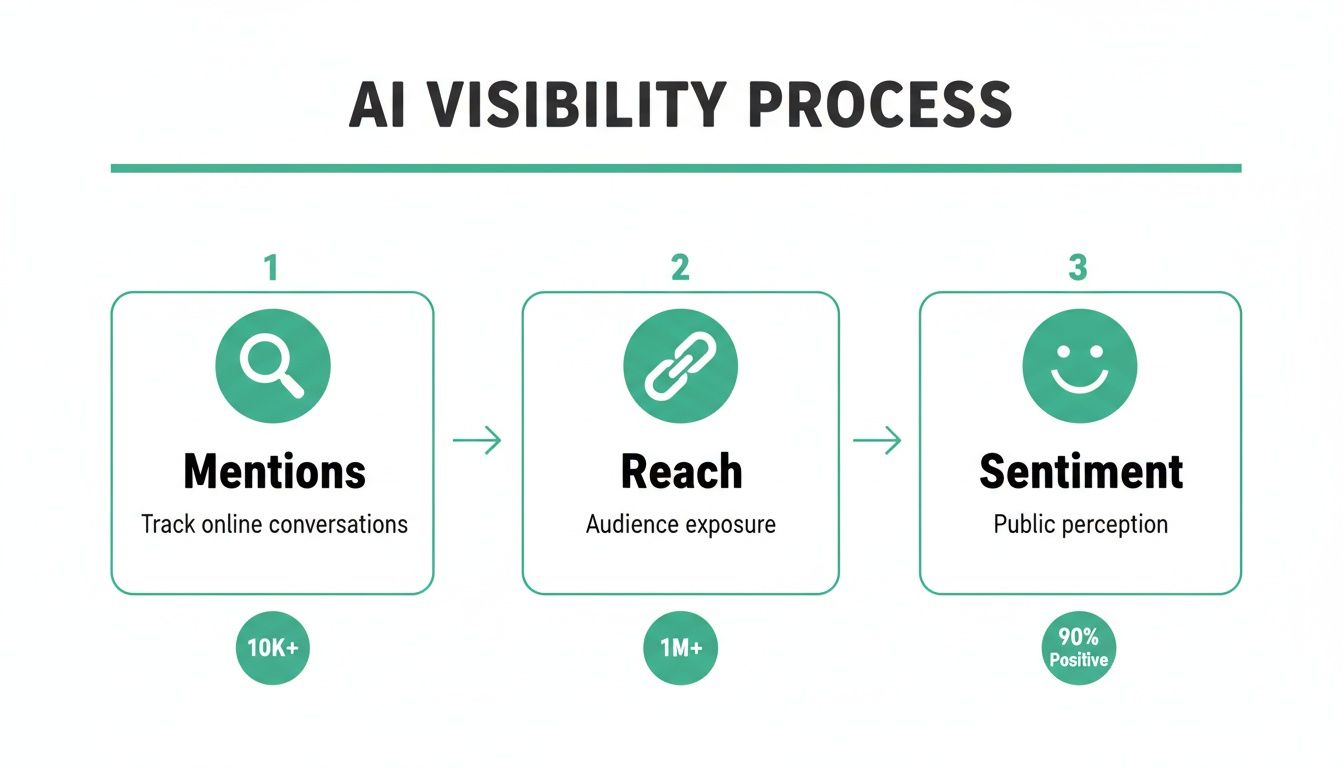
First set up alerts to catch new mentions as they appear. A dip in citation reach should trigger a content update or outreach.
“According to Riff Analytics hourly alerts cut reaction time by 40 percent.”
Set Up Automated Mention Alerts with AI Overview Tracker
Log in and go to Alert Settings. Then:
Define brand keywords and variants
Choose frequency such as hourly checks
Select channels like email or Slack for notifications
Apply Generative SEO Tagging in AI Overview Tracker
Once alerts are live, assign tags to guide AI on content intent:
Topic tags for themes such as buying guides or troubleshooting
Conversion tags on pages with calls to action
FAQ tags on pages that answer common questions
| Workflow Step | Platform Example | Key Metric |
|---|---|---|
| Alert Configuration | Riff Analytics | Mention Count |
| Tagging Pages | Riff Analytics | Context Relevance Score |
| Analysis and Iteration | Riff Analytics | Citation Reach |
Measure Visibility Gains with AI Overview Tracker
Review weekly dashboards for trends and underperforming pages. Refresh content or boost links to regain share of voice.
Explore advanced tactics in our guide on how to rank in Google AI Overviews.
Optimize Internal Linking for AI Overview Tracker Visibility
Use internal links to signal high value pages:
Link anchors to pages rich in mention detection data
Reduce click depth so key pages load quickly
These adjustments improve indexation speed and citation volume.
Comparison of AI Overview Tracker Tools
Choosing the right tool is like picking a compass for a hike. Accuracy and reliability matter.
Top Features and Setup for AI Overview Tracker Tools
Some platforms offer guided setup wizards while others provide full API flexibility. Key factors include:
Ease of onboarding or manual configuration
Support for various AI search APIs and snippet aggregators
Availability of developer APIs or webhooks
Pricing Tiers and Use Cases for AI Overview Tracker Tools
Plans range from free trials to enterprise contracts. Consider your tracking volume and support needs:
Basic plans for startups testing AI search visibility
Mid level for agencies managing multiple clients
Enterprise with white label reports and unlimited LLM tracking
Below is a comparison of popular AI overview tracker platforms:
| Tool | Key Features | Pricing | Best For |
|---|---|---|---|
| thruuu | AI snippet analysis and share of voice graph | 49 to 99 USD per month | Small agencies and freelance SEO |
| Ziptie | AI assistant for keyword extraction | 99 to 699 USD per month | Teams needing automated suggestions |
| SE Ranking | Multi region AI overview tracking | 95 to 207 USD per month | SMBs with regional focus |
| SEOMonitor | Daily overview reports and device insights | 116 to 151 USD per month | Brands needing daily insights |
| SEOClarity | Competitor benchmarks and trend analysis | Custom pricing | Large enterprises and agencies |
How To Choose the Right Option
Map your needs to each tool’s strengths. If API alerts matter most, pick a platform with robust developer support. For visual dashboards, look for interactive reporting features.
Evaluate Integration and Support
Verify API options and review documentation before committing. Check uptime and support response times to ensure long term reliability.
Real World Examples of AI Overview Tracking
Retail Brand Boosts Overview Tracker Presence
A global retailer used AI overview tracking to catch every brand mention. In three months they saw a 45 percent lift in generative search presence by tagging low scoring pages and refining content.
Tools Riff Analytics and Google AI Overviews data
Workflow Hourly alerts flagged new citations
Outcome 45 percent increase in share of voice
Healthcare Provider Monitors LLM Citations with AI Overview Tracker
A healthcare system logged each AI citation of medical sources. This audit improved citation reach compliance to 100 percent and cut misinformation risk in half.
Monitoring Custom workflows in Riff Analytics
Metrics Unique medical sources feeding AI snippets
Outcome 100 percent compliance
B2B SaaS Firm Benchmarks Competitors Using AI Overview Tracker
A B2B software company measured share of voice across rivals. They used sentiment analysis to adjust messaging and achieved a 30 percent jump in AI mentions.
Share of Voice via AI visibility dashboards
Sentiment Analysis to refine context
Outcome 30 percent gain in mentions
During this time generative AI private funding reached 33.9 billion USD. Read details in the Stanford HAI AI Index report.
| Industry | Key Metric | Approach | Outcome |
|---|---|---|---|
| Retail | Generative Search Presence | Hourly alerts and content tags | 45 percent uplift |
| Healthcare | Citation Reach Compliance | LLM citation logs and weekly reviews | 100 percent compliance |
| B2B SaaS | Competitive Benchmarking | Share of voice and sentiment analysis | 30 percent gain |
Key Takeaways From Examples
Rapid alerts and tagging drive fast visibility gains
Citation reach tracking ensures compliance
Competitor benchmarks expose content gaps
Sentiment analysis refines messaging for better AI inclusion
Summary
An AI overview tracker is essential for monitoring how models such as ChatGPT, Gemini and Perplexity mention your brand. By focusing on mention count, citation reach and context relevance scores, you can optimize generative SEO and LLM tracking. Setting up real time alerts, tagging high impact pages and iterating on data brings measurable growth. Comparing tools and following audit workflows allows you to maintain a competitive edge in AI search visibility.
Frequently Asked Questions
What is an AI overview tracker and how does it improve generative SEO presence?
How do I set up real time brand mention alerts with an AI overview tracker?
Which metrics are essential for monitoring citation reach and context relevance?
How can I benchmark my brand against competitors using AI overview tracking?
What are best practices for tagging and linking content to boost AI share of voice?